Eve Wheeler
Journalism Portfolio
About

Journalism has always been a field I am immensely passionate about. I studied a Print journalism course at college for two years where I obtained a Level Three Extended Diploma In Media And Technology. I will be using this qualification to begin a Cultural Studies and Journalism degree at university in the year 2022. During the time from now til then, I hope to acquire more experience, to develop my skillset and continue pursuing what I love.

Other Relevant Experince
Alongside my skills in journalism, I also have four years of adobe after effects experience under my belt. I am proficient in all adobe software, thus can harness my ability to create visual photo or video art. I have experience in commissioned video edtiting work, for purposes such as advertisement. I have also dabbled in posting my work on social media for leisure purposes. I learnt an abundance on analytics and growth through this, and eventually managed the account with a humble 20K followers.
Contact

White Fragility And Crocodile Tears.
Let’s talk about white fragility.
White fragility was a term coined by ‘Robin DiAngelo’ in her book ‘White fragility: Why It’s So Hard For White People To Talk About Racism.’ Her book explores race relations across the United States and the systematic behavior perpetrated by white people.
So, what is white fragility?
White fragility is a defense mechanism white people enact to deal with their guilt when their whiteness is highlighted, or their racial stance is challenged. The discomfort that may pose as a reaction to having one’s whiteness highlighted, serves to aid both the comfort and pedestal that comes with being white in our racially inequitable society.
Blatant displays of this, are responses of disbelief, defensiveness, dismissiveness, being argumentative, or simply choosing not to listen. Phrases with the intent of defending themselves such as ‘I don’t see race’ or ‘how could I be racist; I go to BLM protests’ or ‘Everything is racist these days’ or ‘Racism ended with slavery’. Wielding the privilege that comes with being white, to benefit and aid themselves in situations where they want to be backed. Crocodile tears when confronted to ensure it’s their word against the person of colour. All discreet, but powerful ways to undermine and exempt themselves from being held accountable.
Being that racism is systematic, often this form of racism does take on a covert mask as mentioned, as these displays are often made without conscious. Racism and white power alike are ingrained in many hegemonic ideals throughout history and without actively educating and combatting against them, they will mutate in order to remain prevalent - just as they have throughout hundreds of years.
It is common that racism is associated with blatant and with extremist views such as white supremacy, neo-Nazism, slavery and the like. Because this form of racism is the one that is widely known as an identifier, the covertness of white fragility often only goes noticed by people of colour and instances of it go unchallenged, thus leaving it to prevail.
Every person has an ingrained racial bias. Research points to the fact that it is at age 3- 4 that children in the U.S develop the understanding that it is better to be white. It is a mindset that is force-fed to us - albeit sometimes discreetly, through media, our teachers, our books, our neighborhoods etc. It shapes us so that by adulthood the racial bias we possess is full-fledged and almost second nature. Thus, proving that the mindset prevails through systematic benefit and is deeply entrenched in our society.
This leads us to our cases of aversive racism or, white fragility. Most white people have a certain image of what racism looks like. Certain identifiers that separate them from the
rest of white people. With that in mind they can separate and suppress any integral racism they may possess and instead lean into the fact they do not fit the ‘racist’ description, thus dismissing any possibilities that they feed into it.
That one track mindset and avid avoidance to exempt themselves from having any play in racism is greatly harmful. It furthers the chance that when confronted or challenged on their racial worldview or racist actions, they are more likely to erupt in defensiveness or suppress a person of colours voice.
The social cost of a person of colour coaxing white fragility out of a white person, is so frequent that many people of colour make the choice to not call out racial discrimination when they see, hear or experience it at all. And at the hand of aiding ‘white solidarity’ - many white folk will forgo correcting each other's racial missteps, too. In hopes of keeping the peace, which only leaves genuine allyship elusive.
Avoiding confrontation of racism because of its potential to place you in an uncomfortable position, as a white person, is not nor will ever be a viable excuse. It is racism, there is nothing comfortable about it, that is the point. People of colour do not have the privilege to choose whether they will be subject to feeling un-comfort when it comes to addressing racism. Partial action and selective activism leaves people of colour doubting what is and is not genuine solidarity, thus feeling alone and unheard in their struggles.
Choosing to not address racism, or your own ingrained racial bias, due to potential un- comfort is compliance. You cannot be anti-racist and endorse racism. You cannot be an ally and be selective about when to address it. It is essential that white people frequently question and address cases where racism is apparent and actively work to combat it.
DiAngelo states, “the most effective adaption of racism overtime, is the idea that racism is a conscious bias held by mean people.” This tick box way of thinking is why so many refuse to even engage in the idea that they and those around them may hold unprecedented racial ideals, even if not actively being a racist.
Abolishment is an impossible feat so long as white fragility prevails. Remaining compliant and dismissive will only continue to contribute to white domination. It is pertinent that white folk hold themselves accountable and strive to be vigilant and to heed of their inner voice of racial prejudice. It is lives work, something that will take centuries to overcome, but with humility and accountability it is possible.
Homosexuality is not an anomaly.
Despite changes in laws, opinions and stereotypes regarding the rights of the LGBTQ+ community, there is still a prevalent and biting divide in the acceptance versus penalisation of queer folk across the globe.
In only 29 countries out of the worlds 195, there is legalization for same-sex marriage. In 75 sovereign nations, marriage between same-sex couples is illegal and in 11 the death penalty is both imposed and deemed an applicable punishment, for same-sex relations.
Not only is this abhorrent and a very blatant revoke of what should be a human right, but it also begs a simple question.
Why?
There have been dozens of studies throughout history regarding what exactly makes a person homosexual. Is it genetic? (There is a strong genetic influence). Can it be developed through media exposure? (No, that concept is ludicrous.) Is it a choice? (Not even slightly).
Scientists upon scientist have been scrambling for an answer for years, attempting to figure out its driving force, its purpose, it’s belonging in this world.
I’ll give you an answer right now; It’s natural.
Worldwide outrage and pioneering and law-lifting can only go so far, when across the globe we still treat being homosexual as some form of anomaly. I highly doubt scientists would find themselves dedicating time and work into studying why heterosexuality prevails, so what is the fixation on homosexuality?
The roots of homophobia date back to years. Parts of it stem from religious beliefs, that being intimate with someone of the same sex is a sin enough to banish you to the pits of hell. The rest of it, however, developed purely from lack of acknowledgement.
Picture this.
It’s 1900, you’re 15 years old and you have a crush on the girl in your class. It would be fine, except, you’re also a girl. You’ve heard of one case like this before. You know Joe, your crazy neighbor claims he has attraction toward men. You also know that he is regarded a freak of nature, mentally ill and unnatural by your mother, and everyone else in town. There is nobody else that claims homosexuality the same way he does, so it must be because he’s crazy. You internalize that and figure that those feelings – those romantic or sexual feelings toward someone of the same sex, are unnatural, just like your mother says. You decide to hide that part of you, lest you be treated like crazy Joe.
Time has passed, and it’s 1960. You are a 17-year-old boy and confused when you find the boys in the movies just as cute as the girls. You’re worried what this could mean for you. You’ve heard the whispers of homosexuality, and the rampant chokehold it had on some people. You’re aware of its place on the American Psychiatric Associations list of mental disorders, too. You decide to forget about it. You still find girls attractive after all, and you’re certainly not mentally ill. Just to make sure, from that day on you’re a little meaner to the boys that get too close. Crueler to the men that lack masculinity.
It’s 2000 now, different child again. You’re a boy, aged 6, and you ask your father why two boys just kissed on the television, you’ve never seen anything like it. Your father is quick to turn the television off, dismissing what you saw and stressing that things like that are unnatural, that people like that are freaks of nature. You’re only 6, so you’re slightly confused, but the words stick with you. As you age, that taught prejudice isn’t forgotten. You bully boys who look just like the boys who kissed on the television that time. You yell slurs and the boys who dare be intimate with each other, too.
The year reaches 2020. You’re 13 years old and you just received your very first phone. You log onto social media and see an article. ‘I thought I was going to die in a homophobic attack.’ You click the link and read a story of a man who was attacked during a pride parade, left so injured he’ll spent the rest of his life in a wheelchair. You go to ask your parents why this happened, why attending a pride parade or being homosexual is something people are attacked for. Your parents tell you that it’s unnatural, that only mentally ill people are gay. And the thought sticks.
And the cycle goes on and on and on. Until it’s so deeply ingrained in society, it’s irreversible. That is, unless we can make a change.
Admittedly, we have come far in our tolerance and acceptance of the LGBTQ+ community, despite the prejudice that is ingrained within our society.
To be tolerant of other, regardless of sexual/gender orientation, is the bare minimum. However, unfortunately humans do struggle with even that.
So, when large changes are made, like granting queer folk - who are just as human as any other, the right to something as basic as being in a relationship, it must be praised. It must be celebrated.
In some ways we may need to ‘Pavlov dog’ the globe into respecting and allowing freedom of expression, regardless of if it’s viewed as non-conformity.
We must keep making strides as we are, to flush out the idea that homosexuality is an ‘anomaly’ or ‘unnatural’. We must continue to push the fact that absolutely nobody deserves to be discriminated against or punished for who they love. Especially, after it's been proven time and time again to be nothing but another natural part of being a human.
I have hope for the future of the LGBTQ+ community, so long as we don’t start walking backwards.
Everyone deserves to love freely and without fear.
The deterioration of mental health since COVID19 lockdown
Many of the effects from the current pandemic, in all its destruction, are very evident. You don’t need to look far to see empty shelves or a mask on every face or our favorite restaurants who have been given no choice, but to shut their doors. Much of it all is talked about – an unavoidable topic with family and friends, or mundane small talk in the work breakroom. However, if we look beyond the expected, in all its panic-buying-social-distancing glory, there are the effects that go unspoken, and looked past.
More than half of adults and over two thirds of young people said their mental health has gotten worse during the period of lockdown restrictions, from early April to mid-May. Whilst lockdown cannot be labelled as anything but essential, it is important we address the surge in deterioration of mental health, since it has taken place. Things such as loneliness, restrictions, boredom and fears of the virus itself, have been key contributors to poor mental health.
In fact, feelings of loneliness alone have made nearly two thirds of people’s mental health worse during the past month, with 18–24-year old's the most likely to see loneliness affect their mental health.
So, what can be done? A good question. Positive coping mechanisms and self-care are critical during these trying times. A rise in self-harm, alcohol/drug abuse and negative eating habits have been recognized during the period of lockdown, and it is noted that many are unaware of how to access support networks or advice, reassurance or comfort. I’d like to offer you both, as you listen to this, and hopefully you can leave feeling a little lighter.
To insure you have a healthy mind, you must maintain a healthy body first. And no, I don’t mean by creating an indoor gym and weightlifting every day, stopping every so often for a vegetable break.
Though probably fantastic for your body, it is unrealistic during a time where even rolling over in bed can become a struggle.
There is a daunting pressure to be productive during lockdown, to not let time escape you and to not fall behind on any current projects. And of course, that can help. If having a consistent schedule and keeping busy helps the health of your mind – then go crazy. However, it is not essential, and you should carry no guilt for feeling as though you can’t / haven’t achieved anything during the weeks we are shut away.
To speak in a more attainable sense, things such as making sure you get enough sleep, trying to eat something at least once a day, showering and changing your clothes when you can and even sitting in the garden – count as being productive and can be so rewarding for the mind. Keeping in contact with friends and family over text messages or video call could also help, as to provide a semblance of normalcy and consequently put you in a better mood. Avoiding the news could be a benefit, stats and figures are plastered on every channel and in every headline and would only fuel any fears.
The most important thing, though, is to remember to be kind to yourself. These times are tricky and draining. Know that if it’s all you can manage, just getting through the day is more than enough. Everything you are feeling and struggling with is valid – everyone copes and reacts in different ways. The last thing you need during this time is to place pressure on yourself, above all else keeping yourself present and here is the most important thing, and if you have done that it is enough.
Body found in Victoria Park Avenue.
A body has been found in Victoria Park, in Park Avenue, Deal in Kent. It was discovered at 6:56 am in the bushes next to the Tides Leisure Centre.
The park has been taped off by police, and a cordon has been in place. Police are still investigating the scene and are gathering forensic evidence from the area.
Melissa Yore lives in Park Avenue, next to Victoria Park. She states: I heard a scream at 4am. My neighbour said they saw a man in a balaclava running from the park. They said they’ve called the police and reported it.”
Park keeper Gary Cooper states: “I got here for work at 8am but the police wouldn’t let me in. People have told me about a strange man hanging round recently, but I didn’t think anything of it.”
A similar offense took place several years prior as stated by Janet Taylor, the mum of Louise Taylor. She says her 20-year-old daughter Louise was found dead in Victoria Park in December 2016. Builder Billy Symes was convicted of her murder in May 2017.
Janet states: “I don’t even want to think about what the poor girl’s family are going through. Even now I struggle to get out of bed thinking about what that man did to my beautiful daughter. All this just brings those memories flooding back.”
Detective inspector James Budgens states that police urge anyone with information to contact the special hotline on 01303 289014.
Graphic Design
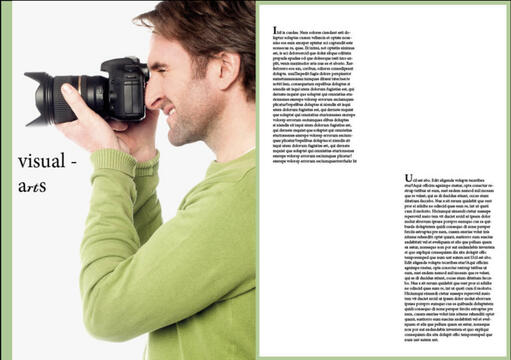
These are two graphic design pieces I worked on. They are magazine spreads produced using Adobe InDesign, in which I have an adroit ability in.